


Introduction
Rebecca Heinrich is widely recognized for her expertise, leadership, and contributions in her professional field. Over the years, Rebecca Heinrich has built a strong reputation through dedication, knowledge, and a commitment to excellence. As interest in Rebecca Heinrich continues to grow, many people are eager to learn more about her age, career journey, achievements, and the milestones that have shaped her success story.
Her professional accomplishments have earned respect and recognition, making her an influential figure for those who follow her work. Whether you’re interested in her background, career development, or notable achievements, this guide provides a complete overview. At SkyFrocks.com, we explore the life and accomplishments of Rebecca Heinrich, highlighting the experiences and successes that have defined her inspiring journey in 2026.
Who Is Rebeccah Heinrichs? A Quick Overview
Before diving deep, here’s a snapshot of who Rebeccah Heinrichs is in 2026:
| Detail | Information |
| Full Name | Rebeccah Lynn Heinrichs |
| Date of Birth | July 9, 1982 |
| Age in 2026 | 43 years old (turns 44 on July 9, 2026) |
| Birthplace | Ohio, United States |
| Zodiac Sign | Cancer |
| Nationality | American |
| Profession | Senior Fellow, National Security Analyst, Author, Educator |
| Current Role | Senior Fellow & Director, Keystone Defense Initiative — Hudson Institute |
| Husband | Jon Heinrichs |
| Children | Five |
| Residence | Virginia |
| Net Worth (2026) | Estimated $1.75 million – $2 million |
| Education | BA – Ashland University; MA – US Naval War College; Doctorate – Missouri State University |
Rebecca Heinrich Age: How Old Is She in 2026?
One of the most searched questions about this defense expert is: how old is Rebecca Heinrich?
The answer is clear. Rebeccah Heinrichs was born on July 9, 1982, making her 43 years old as of early 2026. She will turn 44 on July 9, 2026. Her zodiac sign is Cancer, a sign often associated with deep intuition, strong family values, and fierce protectiveness. Anyone who follows her work on nuclear deterrence policy and strategic national security would likely agree those traits describe her well.
Some sources have placed her birth year in 1983, citing her birthday as February 6 noting she shares it with President Ronald Reagan. Other biographical records consistently point to July 9, 1982. The most credible institutional sources, including her Hudson Institute profile and detailed biographical records, confirm the 1982 birth year.
What matters more than the precise number is the sheer body of work she has produced in those four-plus decades, a career trajectory that most professionals twice her age would struggle to match.
Early Life and Family Background
Growing Up With Purpose
Rebeccah Heinrichs grew up in Arlington, Virginia, though her roots trace back to Ohio, where she would later complete her undergraduate education. Her upbringing near Washington, D.C. gave her something rare: proximity to the machinery of American governance from a young age.
The discussions happening around Capitol Hill, the Pentagon, and the corridors of think tanks weren’t abstractions to her; they were part of the atmosphere. Growing up in a household that valued civic responsibility, intellectual inquiry, and moral clarity shaped her worldview in ways that no classroom alone could replicate.
She grew up at a historically significant time. The late 1980s and early 1990s when she was forming her understanding of the world encompassed the fall of the Berlin Wall, the dissolution of the Soviet Union, the Gulf War, and America’s emerging role as the world’s sole superpower. These were not just news events. For a curious young mind with a natural interest in why some nations posed threats and others became allies, these were formative lessons in international relations and global power dynamics.
Family Values That Shaped a Career
Her parents’ names remain private, a reflection of the discretion she has maintained throughout her public career. What is clear is that the values instilled during her childhood hard work, intellectual honesty, public service, and faith became the foundation of everything she built afterward.
That same respect for privacy extends to her own family today. She and her husband Jon Heinrichs have five children and live in Virginia. Despite maintaining a significant public presence through media appearances and policy work, she keeps her home life carefully separated from her professional identity.
Educational Background: Building the Foundation
Few people in the national security and defense policy space can match Rebeccah Heinrichs’s academic credentials. Her educational journey is a masterclass in deliberate, strategic learning, each degree building on the last and sharpening her expertise in ways that positioned her for maximum impact.
Ashland University Bachelor of Arts
Heinrichs earned her Bachelor of Arts in History and Political Science from Ashland University in Ohio in December 2004. During her undergraduate years, she was recognized as an Ashbrook Scholar, a prestigious distinction awarded to students demonstrating exceptional academic achievement and commitment to American political thought and history.
This wasn’t just a credential, it was a foundation. The Ashbrook Scholar program, known for its rigorous engagement with primary historical and philosophical texts, trained her to think deeply about the principles underlying American foreign policy and national defense.
Her connection to Ashland University didn’t end at graduation. She currently serves on the university’s Board of Trustees, giving back to the institution that helped launch her career.
US Naval War College Master of Arts
Her next step was one of the most prestigious military educational institutions in the world: the US Naval War College. There, she pursued a Master of Arts in National Security and Strategic Studies.
The results speak for themselves. She graduated with highest distinction from the College of Naval Command and Staff and received the Director’s Award for academic excellence, the top academic honor available to graduates. This was not a participation trophy. It was earned through rigorous engagement with some of the most complex strategic and operational challenges facing American defense planners.
Missouri State University Doctorate in Defense and Strategic Studies
Heinrichs completed her academic journey at Missouri State University, where she earned a Doctorate in Defense and Strategic Studies graduating with distinction.
This doctoral program, renowned for producing serious defense intellectuals rather than generalist policy commentators, gave her the analytical depth that now distinguishes her work from peers who rely primarily on political instinct rather than strategic rigor.
Career Timeline: From Policy Research to National Security Leadership
The Early Career Jumping Into Public Policy
Fresh out of academia, Rebeccah Heinrichs entered the competitive world of Washington D.C. policy research. She didn’t start with a guaranteed platform or a famous last name opening doors. She started with expertise, discipline, and a willingness to do the work that many aren’t prepared to do.
Her early roles tested her analytical abilities constantly. She juggled multiple projects, learned Washington’s complex landscape from the inside, and built relationships with professionals who had actually lived the experience of shaping national security decisions, not merely studied it from the outside.
The Institute of World Politics played a pivotal role in this phase. It connected her with mentors who combined scholarly excellence with real-world policy experience, people who understood how strategic decisions actually get made and what it takes to influence them. She has never forgotten that foundation.
Hudson Institute Senior Fellow and Keystone Defense Initiative Director
The centerpiece of Rebeccah Heinrichs’s professional life is her work at the Hudson Institute, one of Washington’s most respected nonpartisan think tanks. She currently serves as a Senior Fellow and directs the Keystone Defense Initiative, a program focused on shaping U.S. national defense policy with a particular emphasis on strategic deterrence.
Her work at Hudson is not confined to writing papers that gather dust in academic libraries. She identifies real vulnerabilities in defense systems, advocates for concrete policy changes, and provides research that influences actual decisions at the highest levels of American governance.
Through the Keystone Defense Initiative, she has built a platform that sits at the intersection of research, education, and policy advocacy exactly where the most meaningful work in national security happens.
Teaching at the Institute of World Politics
In addition to her research role, Heinrichs serves as an Adjunct Professor at the Institute of World Politics, where she teaches nuclear deterrence theory. This teaching role reflects something important about her character: she doesn’t just want to influence policy in the present. She wants to shape the next generation of defense analysts and national security professionals.
Her students at the Institute of World Politics gain access to a teacher who doesn’t just explain theory; she has lived the application of these ideas through years of practical policy engagement.
Contributing Editor Providence Journal
Heinrichs also serves as a Contributing Editor for Providence: A Journal of Christianity and American Foreign Policy. This role allows her to bridge two worlds that are rarely connected in public discourse: faith-based values and foreign policy analysis. It reflects the breadth of her intellectual interests and her willingness to engage with questions that go beyond pure strategic calculation.
Professional Roles and Affiliations
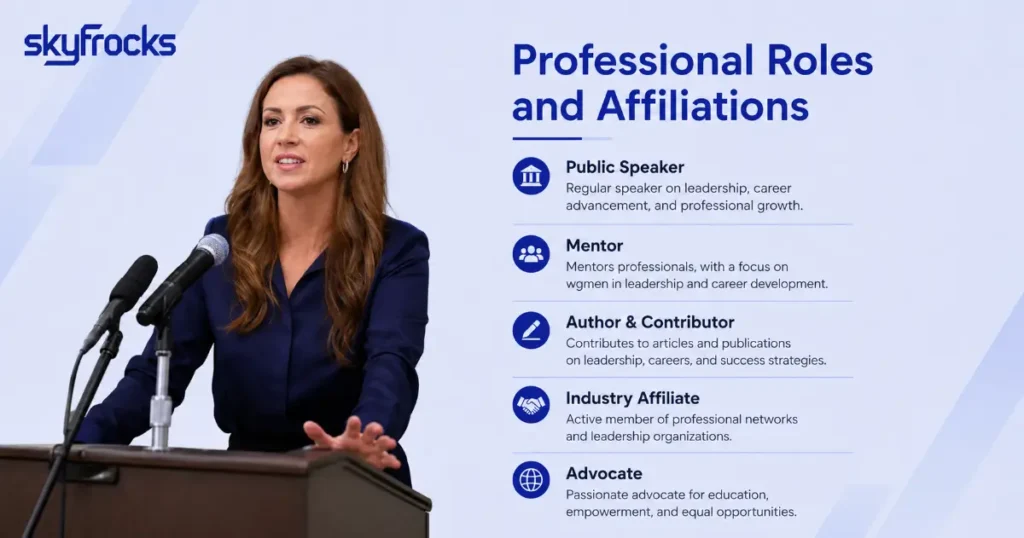
A Multi-Faceted Career Portfolio
What makes Rebeccah Heinrichs genuinely remarkable is the sheer breadth of her professional commitments. She doesn’t occupy a single lane she operates simultaneously across multiple high-impact roles:
- Senior Fellow — Hudson Institute, Washington D.C.
- Director — Keystone Defense Initiative at Hudson Institute
- Adjunct Professor — Institute of World Politics (Nuclear Deterrence Theory)
- Contributing Editor — Providence: A Journal of Christianity and American Foreign Policy
- Fox News Contributor — Regular defense and national security commentator
- Commissioner — Bipartisan Strategic Posture Commission (FY 2022 NDAA)
- Advisory Board Member — US Strategic Command Advisory Group
- Panel Member — National Independent Panel on Military Service and Readiness
- Board of Trustees Member — Ashland University
Each of these roles carries real weight. She’s not a name on a letterhead, she’s an active, contributing voice in every organization she’s affiliated with.
The Bipartisan Strategic Posture Commission
One of the most significant milestones in her career came when she served as a Commissioner on the Bipartisan Strategic Posture Commission, established through the Fiscal Year 2022 National Defense Authorization Act. The commission was tasked with assessing America’s strategic nuclear posture, a fundamental question about whether the United States has the right mix of capabilities to deter adversaries and, if necessary, respond to attacks.
The commission’s findings, released in 2023, called for major changes to U.S. defense strategy, including updating the number and types of nuclear weapons to counter growing threats from China and Russia. Heinrichs was a central voice in that work, bringing her deep expertise in nuclear modernization and strategic deterrence theory to one of the most consequential defense policy exercises in recent American history.
US Strategic Command Advisory Group
Her appointment to the US Strategic Command Advisory Group gives her direct influence over defense planning at the highest operational levels of the American military. This is not an honorary position; it involves substantive engagement with the commanders and planners responsible for America’s strategic deterrence mission.
Core Areas of Expertise
Nuclear Deterrence Policy
Nuclear deterrence is the cornerstone of Rebeccah Heinrichs’s professional identity. She has argued consistently and persuasively that a credible nuclear deterrent is not just strategically necessary it is morally justified under just war principles.
Her work addresses a reality that many policymakers have been slow to confront: for the first time in history, the United States must simultaneously deter two nuclear peer adversaries, China and Russia. This is a qualitatively different challenge from the Cold War’s bilateral U.S.-Soviet dynamic, and it demands a fundamentally updated approach to strategic posture, force structure, and nuclear modernization.
Missile Defense Systems
Beyond offensive deterrence, Heinrichs has been a consistent advocate for strengthening American missile defense capabilities. She has directed research at Hudson arguing for building a missile defense system capable of defending against intercontinental ballistic missiles (ICBMs) a position that has sparked significant policy debate but has gained increasing traction as the threat environment has evolved.
Great Power Competition
Her work on great power competition, particularly the growing challenge posed by China’s massive military buildup and Russia’s continued nuclear modernization has made her one of the most frequently cited voices on these issues in Washington policy circles.
She has argued that engaging China economically did not produce the liberalizing effect many hoped for. Chinese leaders remain committed to their ideological framework and are investing aggressively in military and nuclear capabilities. Her analysis of this challenge has shaped how many policymakers think about the urgency of American defense investment.
Arms Control and Nonproliferation
Heinrichs has also engaged seriously with arms control and nonproliferation policy not as an advocate for disarmament but as a rigorous analysis of what policies actually reduce risk versus those that create the appearance of progress while leaving real vulnerabilities intact.
Her work on the Nonproliferation in Great Power Competition report examined how the United States can best manage the risk of allies pursuing their own nuclear weapons in response to doubts about extended deterrence, a particularly sensitive issue in the context of South Korea’s security concerns about North Korean capabilities.
Published Work and Media Presence

Read More : Jackie Schimmel’s Husband Revealed: Everything You Need to Know | 2026
“Duty to Deter” Her Landmark Book
On September 11, 2024, Heinrichs published her first book: “Duty to Deter: American Nuclear Deterrence and the Just War Doctrine” through the National Institute for Public Policy (NIPP Press).
The book examines how U.S. nuclear deterrence aligns or can be made to align with the ethical framework of just war theory. It argues that maintaining and strengthening American nuclear capabilities is both strategically necessary and morally defensible given the current threat environment. The book has been well-received in defense policy and academic circles, adding another significant credential to her already impressive portfolio.
Fox News Commentary
Heinrichs is a regular Fox News contributor, appearing frequently to provide expert analysis on defense and national security matters. Her on-screen presence is composed and confident she communicates complex strategic concepts in ways accessible to general audiences without sacrificing analytical depth.
Her media presence is strategic rather than attention-seeking. She uses television appearances to advance substantive arguments about defense policy rather than to build personal celebrity.
Congressional Testimony
One of the defining moments in her career has been congressional testimony, where she has appeared before committees to provide expert analysis on nuclear deterrence, missile defense, and strategic posture. Her ability to deliver composed, fact-based responses under pressure from skeptical lawmakers has earned her respect across partisan lines.
Social Media and Public Engagement
On social media particularly Twitter/X defense analyst circles Heinrichs is known for sharp, informed commentary that cuts through noise. Her professional social media presence reinforces her brand as a substantive expert rather than a political pundit.
She has also authored cultural commentary beyond pure defense analysis. In 2021, she published “Baby Bust” for The American Mind, engaging with demographic trends and family policy in America demonstrating an intellectual range that extends beyond missile trajectories and warhead counts.
Net Worth and Financial Success

Rebecca Heinrich Net Worth 2026
Rebeccah Heinrichs has built genuine financial success through decades of high-level professional work. Her estimated net worth in 2026 ranges from $1.75 million to $2 million, reflecting multiple income streams that have grown steadily throughout her career.
Her financial trajectory looks like this:
| Year | Estimated Net Worth |
| 2019 | ~$500,000 |
| 2021 | ~$700,000 |
| 2023 | ~$1.1 million |
| 2025 | ~$1.5 million |
| 2026 | ~$1.75 – $2 million |
Income Sources
Her wealth comes from a diversified portfolio of professional activities:
- Hudson Institute senior fellow salary — her primary income source, commensurate with her seniority and the institute’s recognition of her expertise
- Keystone Defense Initiative director compensation — reflects the leadership responsibility of running a major research initiative
- Adjunct professor income — from her teaching role at the Institute of World Politics
- Speaking engagement fees — she is in demand as a speaker at defense, policy, and academic conferences
- Fox News contributor fees — compensation for regular on-air commentary
- Book royalties — from “Duty to Deter” and other published works
- Advisory board compensation — from her roles on government and institutional advisory panels
This diversified approach to income generation deeply rooted in intellectual contribution rather than brand partnerships or entertainment is a model of sustainable financial growth for professionals in the policy world.
Personal Life: Marriage, Family, and Faith
Jon Heinrichs Her Husband of Over 22 Years
Rebeccah Heinrichs is married to Jon Heinrichs, who serves as an Executive Pastor at Awaken Church in San Diego, California. The couple has been married for over 22 years as of January 2026 a significant milestone by any measure.
In September 2024, she shared a tribute to her husband celebrating 21 years of marriage. Their 22nd anniversary in September 2025 was also marked with a heartfelt social media post: “22 years married today!” a small but telling glimpse into the personal life she otherwise keeps carefully private.
Jon Heinrichs, described as a passionate husband, father, and pastor, serves in regional pastoral leadership for the San Diego Central Region of Awaken Church, which operates multiple campuses across San Diego County and beyond.
Five Children and a Life Well-Balanced
Together, Rebeccah and Jon have five children. Raising a large family while maintaining one of Washington’s most demanding careers in defense policy is no small feat. It requires extraordinary time management, clear priorities, and a support structure built on genuine partnership.
Heinrichs has spoken publicly about the rewards and challenges of motherhood including in her 2021 article “Baby Bust,” where she engaged with demographic trends in America from a perspective that combined personal experience with policy analysis.
The Virginia-San Diego Arrangement
One of the more logistically interesting aspects of their family life is the geography. Rebeccah is based in Virginia, close to Washington’s policy community, while Jon maintains his pastoral responsibilities in San Diego. The couple has navigated this arrangement while raising five children a logistical challenge that reflects both partners’ deep commitment to their respective professional callings.
What Makes Her Success Story Different
Not an Overnight Success
Rebeccah Heinrichs did not arrive at her current prominence through a single viral moment, a lucky break, or family connections. Her success was built brick by brick, across decades of consistent work, continuous learning, and willingness to engage with difficult, sometimes unpopular arguments.
Early in her career, she faced the same skepticism that many women entering national security fields encounter in a world historically dominated by men with military backgrounds. She responded not by softening her positions or conforming to expected roles, but by producing work of such quality that the skepticism became impossible to sustain.
Gender Representation in National Security
Her success carries significance beyond her individual achievements. Women remain underrepresented in senior national security and defense policy roles. Heinrichs’s prominence as a senior fellow directing a major initiative, testifying before Congress, appearing regularly on national television, and publishing authoritative work on nuclear deterrence represents meaningful progress for gender representation in a field that needs more diverse analytical perspectives.
She has never made this a central part of her public identity, preferring to let her work speak for itself. But the significance is not lost on younger women entering the field who see in her career a proof of concept: that rigorous expertise, consistently applied, can break through even the most resistant professional environments.
The Combination of Faith and Foreign Policy
Few experts in the defense policy space engage seriously with the ethical dimensions of nuclear weapons, the profound moral questions about deterrence, proportionality, discrimination in targeting, and the ethics of threatening mass destruction to preserve peace. Heinrichs has built an entire intellectual framework around these questions, integrating just war theory with contemporary strategic analysis in ways that are both philosophically rigorous and practically relevant.
Her book “Duty to Deter” is the most complete expression of this approach and its reception suggests there is genuine appetite for this kind of integrated analysis that takes moral questions as seriously as strategic ones.
Rebecca Heinrich’s Impact on U.S. Defense Policy in 2026
The Current Threat Landscape
In 2026, the threat environment Heinrichs has spent her career analyzing is more pressing than ever. The United States faces:
- A China that has dramatically expanded its nuclear arsenal and shows no signs of accepting arms control constraints
- A Russia that has demonstrated willingness to use nuclear threats to constrain Western responses to conventional aggression
- A North Korea that has continued advancing its nuclear and missile capabilities
- An Iran whose nuclear ambitions remain a central concern for Middle East stability
Heinrichs has argued consistently that this environment demands a fundamental rethinking of U.S. nuclear posture moving away from assumptions that worked during the Cold War and toward a more complex, multi-threat deterrence framework.
Nuclear Modernization Advocacy
One of her most consistent policy positions has been the urgent need for nuclear modernization. America’s nuclear triad, the combination of land-based ICBMs, submarine-launched ballistic missiles, and strategic bombers is aging. Heinrichs has made the case, repeatedly and with rigorous supporting analysis, that allowing these systems to deteriorate while adversaries modernize their own capabilities represents an unacceptable strategic risk.
This position has not always been popular in all policy circles. But the bipartisan Strategic Posture Commission’s 2023 findings largely aligned with her long-held views, a validation that speaks to the quality and foresight of her analysis.
Extended Deterrence and Alliance Management
Heinrichs has also engaged deeply with the challenge of extending America’s commitment to defend allies under the nuclear umbrella. She has raised concerns that doubts among allies, particularly in Asia, about the credibility of American extended deterrence could drive them to pursue their own nuclear capabilities, an outcome that would represent a catastrophic failure of nonproliferation policy.
Her work on South Korea’s nuclear considerations and the credibility of U.S. assurances to Asian allies has been particularly timely given evolving security dynamics in the Indo-Pacific region.
Key Career Achievements at a Glance
Here’s a structured overview of Rebeccah Heinrichs’s most significant professional milestones:
| Year | Achievement |
| 2004 | BA in History & Political Science — Ashland University (Ashbrook Scholar) |
| 2004–2010 | Early career in public policy research and think tank work |
| 2010s | Joined Hudson Institute as Senior Fellow |
| 2021 | Published “Baby Bust” for The American Mind |
| 2022 | Appointed Commissioner on Bipartisan Strategic Posture Commission (FY 2022 NDAA) |
| 2023 | Commission releases landmark report on U.S. strategic nuclear posture |
| 2024 | Published “Duty to Deter: American Nuclear Deterrence and the Just War Doctrine” |
| 2024–2025 | Expanded advisory roles; US Strategic Command Advisory Group |
| 2025–2026 | Continued leadership of Keystone Defense Initiative; ongoing Fox News commentary; doctoral completion |
Lessons From Rebecca Heinrich’s Professional Success
Her career offers several transferable lessons for anyone building expertise-based success in competitive professional fields:
1. Depth beats breadth. She deliberately specialized in nuclear deterrence and strategic defense, not defense policy generally. That specificity made her an irreplaceable voice rather than just another commentator.
2. Academic credentials matter but application matters more. Her three degrees are impressive. What made them valuable was translating them into policy impact, not just academic recognition.
3. Persistence through setbacks. Her career trajectory wasn’t linear. Proposals rejected, positions not secured, arguments challenged by skeptical audiences. She converted every setback into fuel for better future work.
4. Build multiple platforms. Research, teaching, media, advisory roles, authorship her influence multiplies because it flows through many channels simultaneously.
5. Integration of values with work. Her engagement with just war theory and the ethics of deterrence isn’t a detour from her career, it’s central to what makes her analysis distinctive and trustworthy.
6. Balance doesn’t require sacrifice. Five children, a 22-year marriage, demanding professional roles in her
life demonstrates that building a successful career and a rich family life are not mutually exclusive, though both require deliberate effort.
Frequently Asked Questions (FAQs)
How old is Rebecca Heinrich in 2026?
Rebeccah Heinrichs is 43 years old in 2026, born on July 9, 1982, and will turn 44 on July 9, 2026.
Where does Rebecca Heinrich work?
She serves as a Senior Fellow and Director of the Keystone Defense Initiative at the Hudson Institute in Washington, D.C.
What is Rebecca Heinrich’s net worth in 2026?
Her estimated net worth in 2026 is approximately $1.75 million to $2 million, earned through her multiple professional roles.
Who is Rebecca Heinrich married to?
She is married to Jon Heinrichs, an executive pastor at Awaken Church in San Diego, California; they have been married for over 22 years.
What is Rebecca Heinrich’s educational background?
She holds a BA from Ashland University, an MA from the US Naval War College (with highest distinction), and a Doctorate from Missouri State University in defense and strategic studies.
What does Rebecca Heinrich specialize in?
She specializes in nuclear deterrence, missile defense, arms control, counter-proliferation, and strategic competition with China and Russia.
Has Rebecca Heinrich written any books?
Yes she published “Duty to Deter: American Nuclear Deterrence and the Just War Doctrine” in September 2024 through NIPP Press.
Is Rebecca Heinrich on Fox News?
Yes, she is a regular Fox News contributor, appearing frequently to provide expert national security and defense policy analysis.
What is the Keystone Defense Initiative?
The Keystone Defense Initiative is a program at the Hudson Institute, directed by Heinrichs, focused on U.S. national defense policy with emphasis on strategic deterrence.
Does Rebecca Heinrich have children?
Yes, she and her husband Jon Heinrichs have five children and currently reside in Virginia.
What is Rebecca Heinrich’s role on the Strategic Posture Commission?
She served as a Commissioner on the Bipartisan Strategic Posture Commission created by the FY 2022 National Defense Authorization Act, which assessed America’s nuclear posture.
Where was Rebecca Heinrich born?
She was born in Ohio and grew up in Arlington, Virginia, near Washington, D.C.
Conclusion: Why Rebecca Heinrich’s Story Matters in 2026
In an era when national security is no longer a background concern but a front-page reality for millions of Americans, the work that Rebeccah Heinrichs does at the Hudson Institute, in congressional testimony, in classrooms, and on television screens matters enormously.
Her professional success story is not about celebrity or personal brand-building. It’s about the slow, disciplined accumulation of expertise, applied consistently over decades in service of a mission she genuinely believes in: ensuring that America has the strategic deterrence capabilities to protect itself and its allies in an increasingly dangerous world.
At 43 years old in 2026, she is arguably at the peak of her intellectual powers with enough experience to speak with genuine authority and enough energy to remain a prolific contributor across research, education, media, and policy advising simultaneously. Her estimated net worth of $1.75 to $2 million reflects not celebrity, but the real market value of deep, rare expertise applied consistently and honestly.
For anyone studying how to build a career with genuine impact particularly in competitive, male-dominated policy fields, Rebeccah Heinrichs offers one of the most instructive examples available today. She succeeded not by softening her positions, not by playing political games, and not by chasing easy approval. She succeeded by being relentlessly excellent at something that matters.
That, in 2026, is a success story worth knowing.